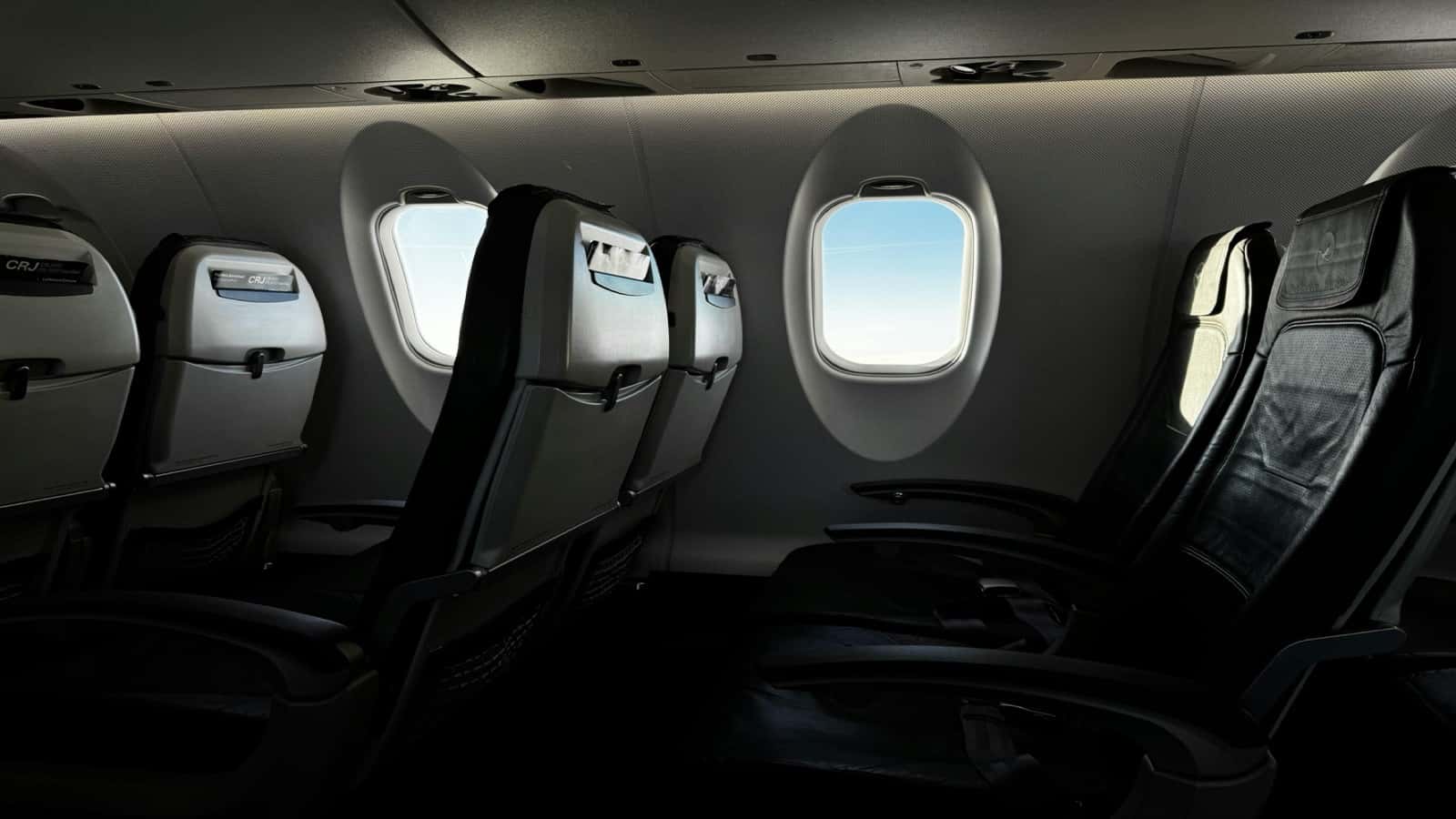
The Boeing 737-800 is the workhorse of US domestic aviation. American, United, Southwest, Delta, and Alaska all fly it on huge swaths of their networks. If you fly domestic in the US more than a few times a year, you'll spend most of your time on this airframe. And while specific row numbers shift slightly by airline, the seat advice has been remarkably stable for over a decade: the same three or four seats are consistently the best, and the same handful are consistently the worst.
How we evaluated
This piece draws on three public sources. First, SeatGuru's seat-by-seat data for the 737-800 across the major US carriers — pitch measurements, recline limitations, proximity-to-galley flags. Second, recurring discussion threads in r/flying, r/flights, and r/travel where frequent flyers debate the same airframe over and over and converge on the same picks. Third, published airline seat-selection policies that govern what's actually free vs. paid and when those rules change. No insider channels, no first-hand seat-by-seat comparisons. Just the public record.
The verdict
The exit-row aisle or window — typically rows 16 and 17 on the most common 737-800 configurations — earns a Worth-It Score of 8.9. The combination of 3-5 inches of extra legroom, near-universal community agreement, and the fact that on most airlines elite-status flyers and 24-hour-out check-in passengers can grab them for free makes this the highest-value seat choice on a domestic flight you'll make all year. The score isn't 9.5 only because availability is genuinely tight — you have to be looking, and you have to be ready.
The evidence
The exit row math
SeatGuru's published pitch data for the 737-800 across the major US carriers shows exit-row pitch typically running 35-38 inches versus a standard economy pitch of 30-32 inches. That's 3-5 inches of additional legroom — enough that a 6'2" passenger goes from "knees in the seat-back" to "able to cross legs." The exit row is on rows 16 and 17 on the most common American and United configurations and shifts by a row or two on Southwest and Alaska's 737-800 layouts. The window seat in row 16 (16A or 16F depending on side) and the aisle seat in row 17 (17C or 17D) are the most-recommended specific seats in nearly every frequent-flyer discussion.
What community consensus has converged on
Across years of r/flying and r/flights threads, the picks repeat. On Southwest's 737-800, 16C and 16D draw specific praise as the best free open-seating choice — exit row, aisle, and on Southwest you don't pay extra for them, you just have to board early enough. On American and United, 17C/17D are the recurring picks because they combine exit-row legroom with aisle access. The phrase "exit row aisle, then exit row window, then everything else" appears repeatedly in these threads as the practical hierarchy.
The bulkhead trade-off
Row 1 — the bulkhead — has more legroom than standard economy but comes with two real downsides documented across SeatGuru and community discussion. There's no under-seat storage because there's no seat in front, so your bag goes overhead and stays there for takeoff and landing. SeatGuru also flags that the bulkhead seats on some 737-800 configurations have limited recline. Frequent flyers consistently rate exit row above bulkhead for net comfort.
The seats to avoid
The last row of the 737-800 — typically row 30 on American and United, slightly different on other carriers — has three problems documented in both SeatGuru and r/flying: it cannot recline because the lavatory wall is behind it, it sits adjacent to the rear lavatories (smell, line traffic, door bumps), and it's the last row to deplane. Community consensus universally avoids it. Rows immediately behind the over-wing exit doors also frequently carry "limited recline" SeatGuru flags because the exit door mechanism reduces the seat track. Independent analysis from SeatGuru indicates these reduced-recline rows are a common frustration even when the legroom is fine.
Window vs. aisle on overnight flights
Community consensus on r/travel has consistently shown roughly 60-70% of overnight-flight passengers prefer window over aisle on red-eyes — the wall provides something to lean against for sleep, you control the shade, and you avoid being woken by aisle traffic and beverage service. For daytime flights under three hours, aisle is preferred for bathroom access and the ability to step out and stretch.
Who it's best for
For: Frequent domestic flyers
If you fly the 737 more than 6-8 times a year, the cumulative comfort gap between exit row and standard economy is large. Knowing the 24-hour-out seat-release rules for your primary airline is worth more than most flyers realize.
For: Tall travelers prioritizing legroom
At 6'0" and above, the 3-5 inch pitch difference between exit row and standard economy stops being a luxury and starts being the difference between an arrivable flight and three hours of pain. Pay for it if you can't get it free.
For: Window seat prioritizers on overnight flights
For red-eyes, a regular window in rows 10-15 may actually beat an exit-row aisle if sleep is the goal. Lean point matters more than legroom when you're trying to sleep upright.
What it doesn't beat
The exit row on a 737-800 doesn't beat domestic first class, premium economy on a wide-body, or — for some travelers — paying $30-60 for a Main Cabin Extra / Economy Plus seat with confirmed legroom on a flight that matters. It also doesn't beat being flexible on your dates: a flight at off-peak times will have wide-open exit-row availability, while a Friday-night flight to a hub may have those seats locked up by status passengers before check-in opens. The strategy is "exit row when you can get it" — not "exit row at any price."
Verdict
The Verdict
Exit Row Seats on Boeing 737-800
Best For
Frequent domestic flyers and tall travelers willing to check in at exactly 24 hours out
Beats
Standard economy on every measurable dimension — pitch, recline, escape from the lavatory line
Doesn't Beat
Premium economy on a wide-body, domestic first class, or a regular window seat for sleep on red-eyes
Based on 3 data sources · Last verified April 1, 2026
Sources
- SeatGuru aircraft data for Boeing 737-800 across American, United, Southwest, Delta, and Alaska configurations (independent-test)
- r/flying, r/flights, and r/travel community threads on 737 seat selection (community-consensus)
- Published airline seat-selection policies including 24-hour-out release windows (expert-analysis)