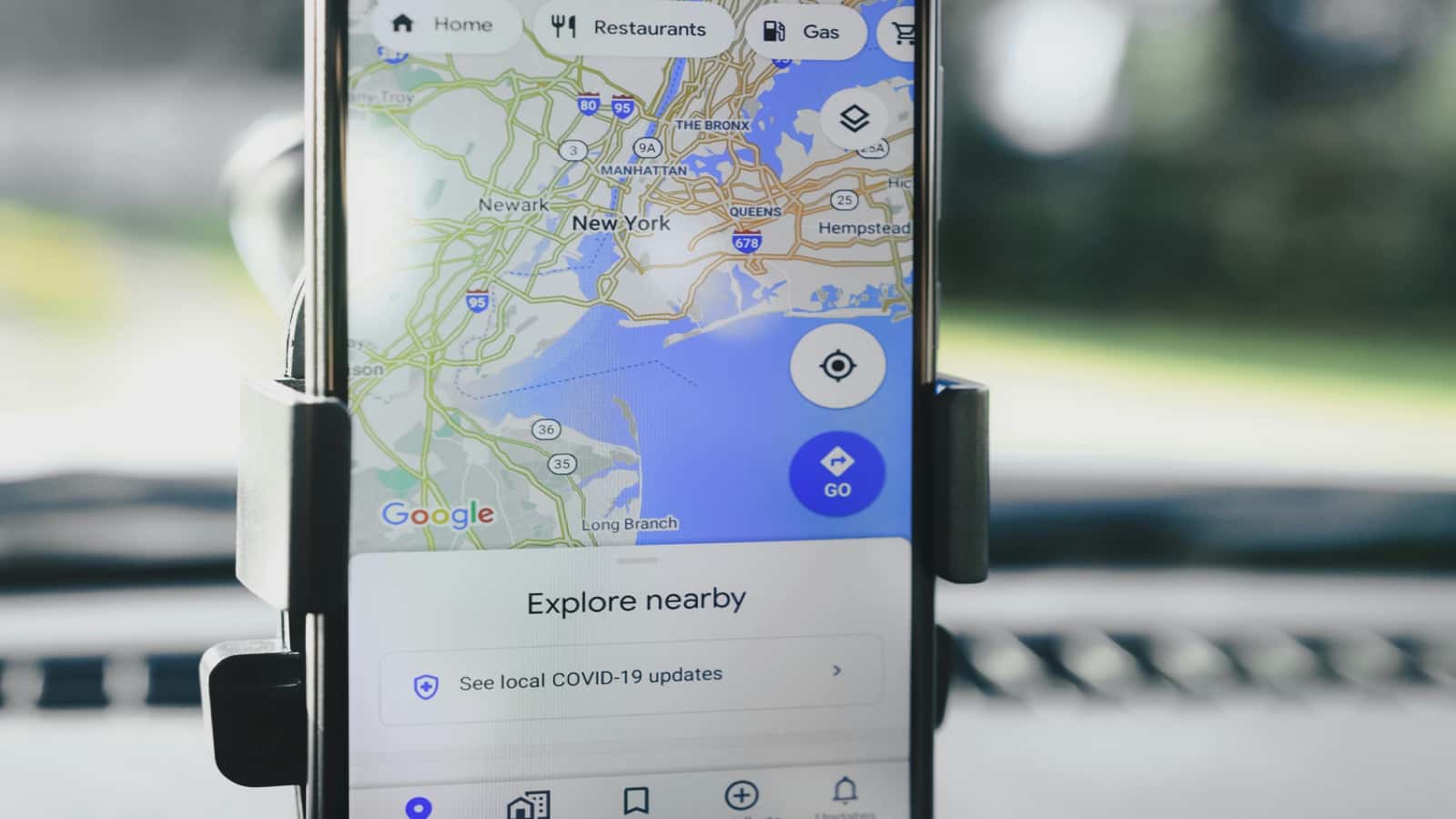
Google Maps uses roughly 5–10 MB of data per hour of active navigation. On AT&T's international day pass ($10/day), that's technically fine — but the day pass triggers the moment any app accesses data, not just Maps, and a 10-day trip costs $100 in day pass fees regardless of whether you use your phone extensively or barely at all. Download the maps for your destination in advance on WiFi, and navigation runs entirely offline for the full trip — no data connection required, no roaming charges for anything you can pre-cache.
How we evaluated
This verdict draws on published international roaming rates from AT&T, Verizon, and T-Mobile, Google Maps published documentation on offline mode functionality and data requirements, aggregated community experience from r/solotravel and r/travel on offline map usage and data cost avoidance, and current pricing data from Airalo and comparable international eSIM providers. No personal data plan comparisons were conducted. All cost figures are sourced from published carrier and provider pricing.
The verdict
Worth-It Score: 9.6 out of 10. Downloading offline maps is the highest-ROI 4-minute task in pre-trip preparation. The cost is zero. The data savings range from modest (travelers with unlimited international plans) to substantial (travelers on day passes or using a local SIM). The only scenario where it doesn't help is if you're already on an unlimited international plan — and even then, offline maps navigate reliably in tunnels, underground transit, and areas with poor signal.
The evidence
What U.S. carrier international data actually costs
Major U.S. carrier international options as of 2026:
AT&T International Day Pass: $10/day, activates whenever your device connects to a network abroad. A 10-day trip: $100.
Verizon TravelPass: $10/day for most countries, same activation model. 10 days: $100.
T-Mobile Magenta and Go5G plans: Include unlimited international data at up to 128 kbps, with higher-speed data available at $5–15/day depending on plan tier. The unlimited-at-low-speed option technically covers offline map downloads but at speeds that make large map downloads slow (a 500MB city region could take 10+ minutes at 128kbps).
Per-MB overage rates without a day pass — applicable to travelers who don't activate a plan — run $0.01–0.015/MB on AT&T and Verizon, meaning even modest navigation use generates substantial charges. Community reports on r/solotravel consistently identify "forgot to disable data" scenarios as a significant source of unexpected phone bills.
What offline maps actually cover
Google Maps offline allows downloading specific geographic regions — a city, a region, or a country depending on size — for use without any data connection. Downloaded maps support: turn-by-turn navigation, address and POI search, business listings including hours and contact info, and transit routing in many cities. They do not support real-time traffic, live transit departure times, or street-level directions that depend on live data.
A downloaded region for a major city (Paris, Tokyo, Bangkok) typically ranges from 200–700 MB. An entire country at navigable detail (Portugal, Greece) ranges from 400 MB–1.5 GB. These numbers are from Google Maps' published storage guidance and are verifiable in the app before download.
Maps.me and OsmAnd are open-source offline alternatives with community-maintained map data and comparable coverage for most destinations. Both are free, and both support full offline use including turn-by-turn navigation.
The actual cost comparison
For a 10-day trip to Europe using carrier day passes for all data needs (AT&T or Verizon):
Without offline maps: Day passes trigger daily for navigation, messaging, and occasional browsing. At $10/day × 10 days: $100.
With offline maps + WiFi-only data use: Navigation runs entirely offline. Messaging and browsing done only on hotel/café WiFi. Day passes triggered only on days when internet access is genuinely needed away from WiFi. Realistic use: 3–4 day passes for a 10-day trip with moderate WiFi access. Cost: $30–40.
Savings: $60–70 on a single 10-day trip. Scaled across two trips: $120–140 annually, for 8 minutes of total pre-trip download time.
Community estimates in r/solotravel range higher — travelers on extended trips without day passes who use local SIMs report offline maps as essential for the first days before a SIM is acquired, and for subway/tunnel navigation where data is unavailable regardless of plan.
The signal-failure use case beyond cost
Offline maps provide reliable navigation in scenarios where data connectivity fails regardless of cost:
- Underground metro systems (Paris Métro, Tokyo subway, London Underground) where data service is absent
- Rural areas and mountainous regions where coverage is patchy
- Airplane mode situations where data roaming is off
- The first hours of a trip before a local SIM is acquired
Community reports on r/travel consistently identify "the first day in a new city" as the highest-value offline maps scenario: jet-lagged, unfamiliar surroundings, not yet connected to a local carrier, navigating from airport to accommodation.
International eSIM as the cost-reduction alternative
International eSIM providers (Airalo, Holafly, Nomad) offer regional data plans ranging from $8–25 for 1–10 GB, valid for 7–30 days — significantly cheaper than carrier day passes for travelers who need continuous data access. A 3GB Airalo Europe plan costs approximately $14 for 30 days.
Community consensus in r/solotravel treats offline maps and eSIMs as complementary: an eSIM provides cheap continuous data, and offline maps reduce the data consumed by navigation, stretching a limited plan further. The combination of a $14 eSIM + offline maps is the lowest-cost connectivity solution for most international trips.
Who it's best for
For: Budget travelers and backpackers on extended trips
Extended travel amplifies every daily cost. At $10/day in carrier charges for 30 days, that's $300 — roughly comparable to a week of accommodation in many budget destinations. Offline maps combined with an eSIM reduce the total connectivity cost for a 30-day trip to under $25 for most regions.
For: Any traveler without an international data plan
If you're traveling internationally without activating any data plan — relying on WiFi only — offline maps are the essential tool that makes WiFi-only travel navigable. Community consensus rates this setup (offline maps + hotel WiFi + messaging apps) as sufficient for most leisure trips to developed destinations.
For: Travelers using a temporary local SIM or eSIM abroad
The SIM acquisition gap — the first 12–24 hours before a local SIM is active — is exactly when offline maps provide the most value. Community reports consistently identify airport navigation, transportation to accommodation, and initial city orientation as the highest-value offline map use cases.
What it doesn't beat
Live traffic data. Offline navigation doesn't reflect road closures, real-time congestion, or construction changes that occur after the map was downloaded. In cities with dynamic traffic patterns, live navigation (via a data connection or eSIM) provides materially better routing.
Real-time transit data. Offline maps show transit routes and stops but not live departure times or service disruptions. In cities where transit runs on irregular schedules, a data connection for real-time apps (Citymapper, local transit apps) provides meaningfully better transit navigation than offline maps alone.
The Verdict
Offline maps (Google Maps or Maps.me)
Best For
Any international traveler who isn't on an unlimited international data plan — the savings on a single 10-day trip typically exceed $50, for 4 minutes of pre-trip download effort.
Beats
Paying $10/day carrier day passes for navigation that could run entirely offline. Offline maps also solve signal-failure scenarios that no data plan addresses.
Doesn't Beat
Live traffic and real-time transit data, which require a data connection. For urban travelers who depend heavily on real-time transit apps, a cheap eSIM is worth pairing with offline maps for full coverage.
Based on 4 data sources · Last verified May 12, 2026
Sources
- AT&T, Verizon, T-Mobile — expert analysis — published international roaming rates, day pass pricing, and per-MB overage charges as of 2026
- Google Maps — expert analysis — published offline mode documentation, coverage specifications, and storage requirements
- r/solotravel and r/travel — community consensus — offline map experience reports, data cost avoidance estimates, and SIM acquisition timing accounts
- Airalo and international eSIM providers — pricing data — published regional plan pricing for cost comparison against carrier day pass options